article by Suvankar Roy
The Sher-e-Bangla National Cricket Stadium in Mirpur is no longer just the home of cricket; it has become the epicenter of an invisible storm. The usual crack of the bat and the roar of the crowd have vanished. In their place remains a heavy silence, fueled by whispers, anxiety, and the looming shadow of the unknown.
Every day, journalists flock to the grounds hoping for a breakthrough—a definitive answer that the entire nation is desperate to hear. Instead, they leave with more questions, sinking deeper into a mire of uncertainty.
The situation ignited when the BCB announced its refusal to travel to India following Mustafizur Rahman’s release from the Kolkata Knight Riders. Almost instantly, the issue transcended the sport, evolving into a national crisis. Bangladesh cricket now finds itself caught in the crossfire of a high-stakes standoff between the BCB, the BCCI, and the ICC.
The true victims of this tension are those who bleed for the jersey—the national players, the team management, and the coaching staff. They are adrift, unsure of what lies ahead. Is it the World Cup? Or a void? A flight to India, or a journey toward an unknown destination?
Inside the dressing room, laughter has been replaced by hushed tones and questioning eyes. Two sentences echo relentlessly: “Are we going?” and “If we go, where will we play?”
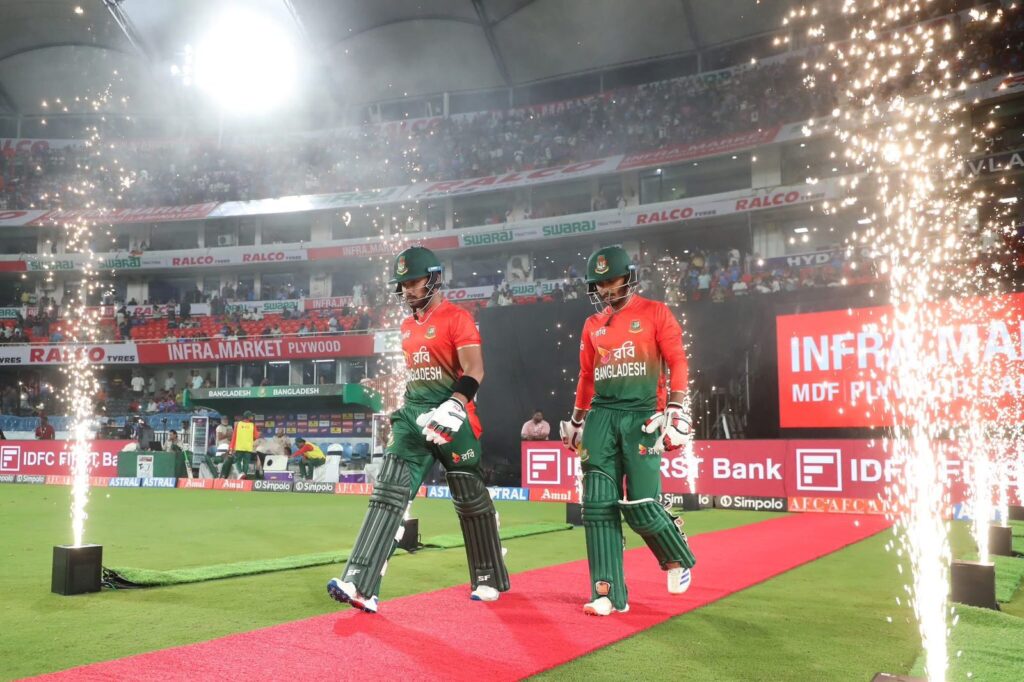
Amidst this turmoil, a new blow has struck. Reports suggest that the Indian sporting goods giant SG has canceled sponsorship deals with several Bangladeshi cricketers, including Litton Das. While not yet officially confirmed, the rumors alone have been enough to heighten the sense of dread. Players know all too well that off-field politics can swallow on-field performance whole.
A BCB official, speaking on the condition of anonymity, revealed that the players are mentally fraying. They are constantly calling for updates, desperate to know the board’s stance. The only response they receive is: “Wait.” For an athlete, this waiting is the most agonizing part of all.
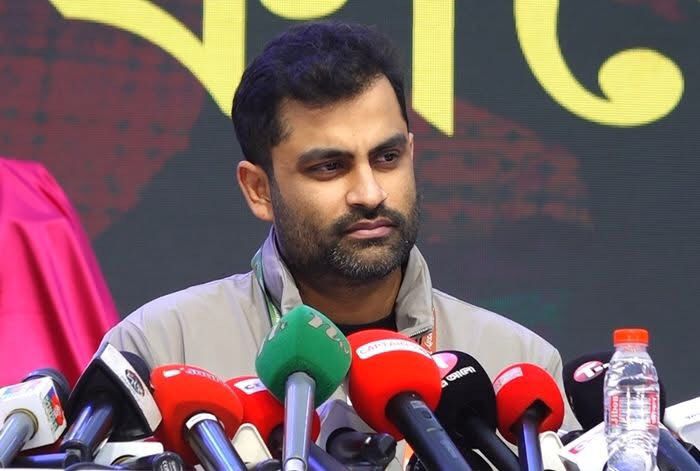
Veteran opener Tamim Iqbal, a man who understands the weight of pressure better than most, finally broke his silence. His voice carried the gravity of experience and a quiet concern for the nation’s future. He described the situation as critical, urging for dialogue and deep reflection. “We must consider where Bangladesh stands in world cricket today and where we want to be in ten years,” he remarked. His message was clear: the decisions made today will either build or break the history of the sport in this country.
Tamim further emphasized that while the government is a key stakeholder, the BCB must operate as an independent body. “We cannot be swept away by emotion or buckle under public pressure,” he warned. “An error in judgment off the field can cause more damage than any loss on it.” His sharpest critique was aimed at the lack of clear communication, noting that conflicting public statements only serve to lead the players into a state of confusion.
The foreign coaching staff is equally unsettled. One member poignantly remarked, “We are here for the cricket. Is there anything bigger than the World Cup?” It was a plea for the fog to lift, for the game to take center stage once more.
Meanwhile, the BCB has dispatched a second letter to the ICC. There has been no reply. The wait continues—a wait that has transformed from a matter of timing into a test of mental fortitude.
The stands in Mirpur are empty.
The nets are silent.
The dressing room is filled with heavy sighs.
Bangladesh cricket stands at a bizarre crossroads. On one side lies the dream of the World Cup; on the other, a complex web of national pride, security concerns, and political maneuvering. Trapped in the middle are young faces, tired eyes, and restless hearts.
This is no longer just a story about a series, a tournament, or a schedule. It is a battle for identity. It is the ultimate question: which path will Bangladesh choose?
Until that answer arrives, the only sound echoing through Mirpur won’t be the cheering of fans, but the rhythmic, heavy breathing of uncertainty.

I am Suvankar Roy, a professional sports journalist with over 4 years of experience and the founder of Sportjupdate. I have interviewed numerous high-profile athletes, bringing a unique insider perspective to every report. Currently an MBA candidate at BIBS, I combine business acumen with a passion for sports to deliver expert analysis.